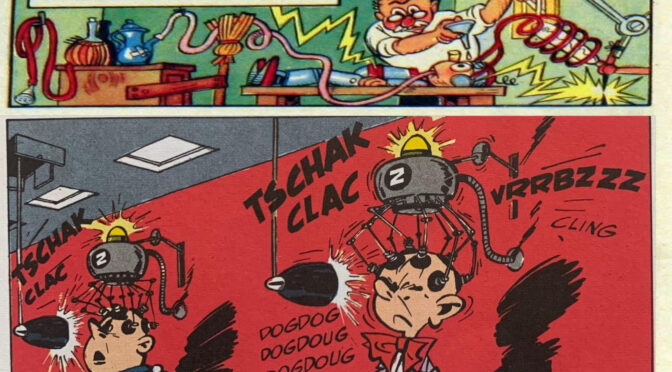
Fuir le monde ou le changer ? Imaginaires de l’utopie dans les journaux Spirou et Il Pioniere
Mercredi, 20 mai, 13 h / KBR (Bibliothèque royale de Belgique), salle du Consilium
Entre la fin de la Seconde Guerre mondiale et les luttes politiques des années 1960, certaines séries de bande dessinées – d’origines et d’orientations politiques diverses – s’emparent des questions de l’utopie et de la dystopie (Le Avventure di Chiodino, Le Avventure di Atomino) ou flirtent avec celles-ci (Spirou). Elles illustrent un Continuer la lecture de ACME SPEAKERS SERIES / THIBAUT NEVEU
Archives de catégorie : ACME Speaker Series
Table ronde – La santé mentale dans la bande dessinée
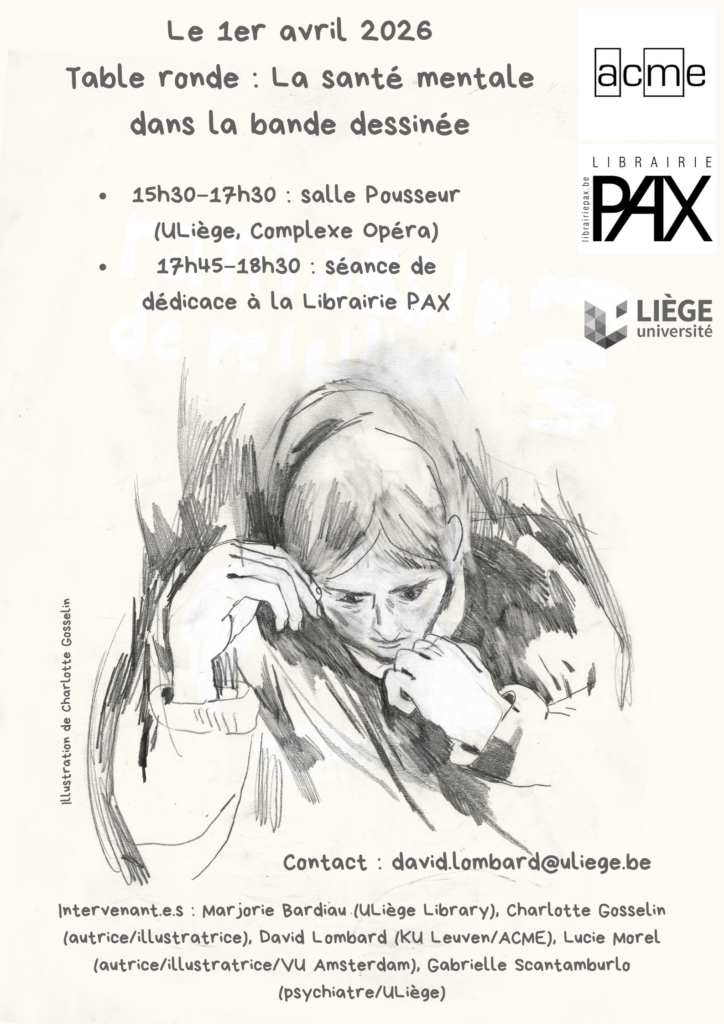
Table ronde : la santé mentale dans la bande dessinée
1er avril 2026 – 15h30-17h30 – Salle Pousseur (ULiège, Complexe Opéra)
Dans un monde où les représentations de la santé mentale méritent d’être à la fois empathiques, créatives et rigoureuses, la bande dessinée émerge comme un médium singulier pour penser, voir et ressentir ce qui échappe souvent aux mots seuls. Cette table ronde propose d’explorer avec nos intervenant.e.s les avantages et les limites de la bande dessinée comme forme de représentation, d’enseignement, de sensibilisation et d’intervention autour des questions de santé mentale, en mobilisant des perspectives artistiques, esthétiques, psychiatriques et pédagogiques. Continuer la lecture de Table ronde – La santé mentale dans la bande dessinée
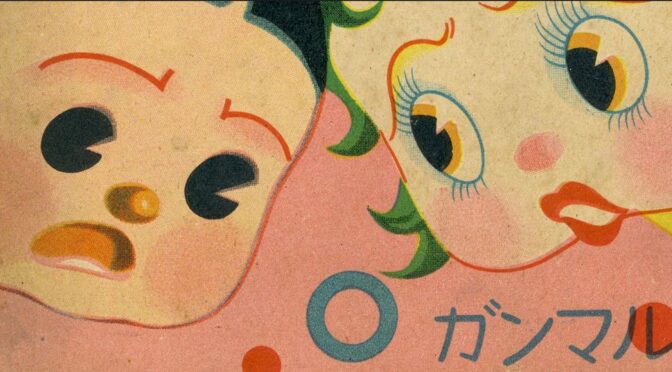
ACME Speaker Series – Andrea Horbinski
Manga’s First Century: How Creators and Fans Made Japanese Comics, 1905-1989
Book talk by Andrea Horbinski
Thursday 27 November 2025 – 18:00-20:00
Université libre de Bruxelles, Campus du Solbosch, salle Baugniet (Bâtiment S)
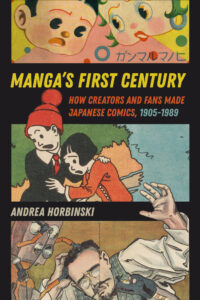
In Manga’s First Century: How Creators and Fans Made Japanese Comics, 1905-1989, Andrea Horbinski explores the rise of manga as a distinct medium in Japanese society in the 20th century. Beginning with the new use of “manga” to refer to high-collar political cartoons in the 1890s, she traces manga’s development across formats through newspapers, magazines, and books as creators sought to expand the medium in the face of challenges ranging from state repression under the imperial government to perpetual editorial stubbornness. Continuer la lecture de ACME Speaker Series – Andrea Horbinski
ACME Speaker Series – Amadeo Gandolfo
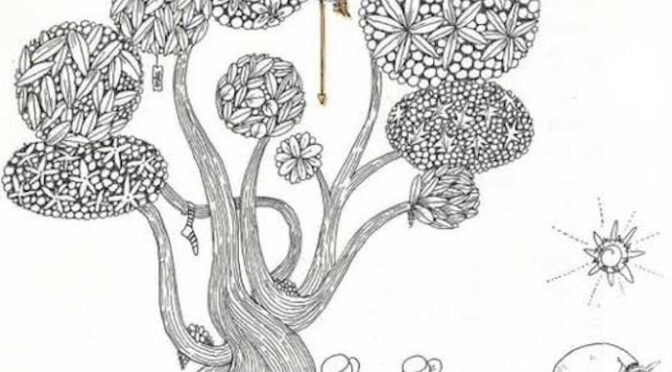
Amadeo Gandolfo, « The Ridiculous Part of Every Great Enterprise: The Works and Life of Oski »
Tuesday 25 March, 10:30 -12:00 / Ghent University (Blandijnberg 2, 9000 Gent), Camelot (third floor)
Oscar Conti (Oski) was one of the most important Argentine cartoonists of the 20th Century. Born in 1914, deceased in 1979, his career spanned the most fertile years of the Argentinian comics industry. He was a cartoonist of an enormous popularity and prestige, profuse production, a frequently cited example of the artistic possibilities of the medium, as well as a political cartoonist. He published in Argentina, and also in Chile, Cuba, France, Germany, Italy, México, Perú, Spain and Venezuela. Continuer la lecture de ACME Speaker Series – Amadeo Gandolfo
ACME Speaker Series – Kin-Wai Chu & Nicolas Verstappen
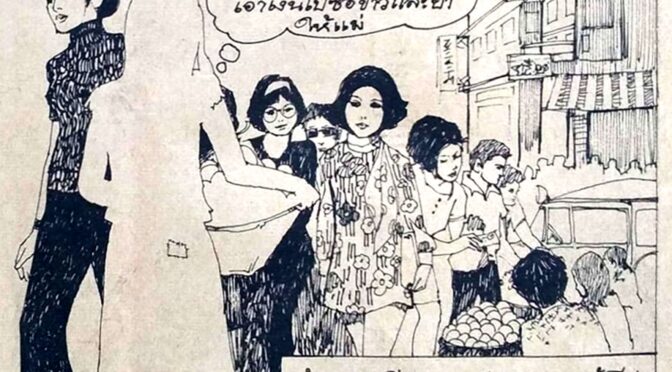
The Colonization of Cartoon in Nineteenth-Century East Asia (Kin-Wai Chu) & ‘Comics for a Better Life’: Social Realist Comics for Children in 1970s-80s Thailand (Nicolas Verstappen)
3 July 2024, 16:00-17:30 – KU Leuven, Erasmushuis (Blijde Inkomstraat 21, 3000 Leuven), room 03.15
The Colonization of Cartoon in Nineteententury East Asia
Kin-Wai Chu, Ghent University
The 19th century witnessed the meteoric ascent of print journalism, a phenomenon intricately woven into the fabric of the industrial revolution, imperialism, and colonialism. Cartoons, as a form of graphic satire, have long been a significant form of journalism and a barometer of press freedom. The term ‘cartoon’ was coined after the British illustrated satirical magazine Punch or The London Charivari (1841-1992, 1996-2002) which was itself inspired by the Paris-based La Charivari (1832-1937). Punch became a template for satirical magazines across the vast expanse of British Empire in the late nineteenth century, leading to the births of dozens of unofficial Asian offshoots, such as the Hong Kong-based The China Punch (1867-68, 1872-75) and the Yokohama-based The Japan Punch (1862-1898). These satirical cartoons could aptly evade press censorship with wit and artistry, albeit not without struggles. Continuer la lecture de ACME Speaker Series – Kin-Wai Chu & Nicolas Verstappen
ACME Speaker Series / Lukas Etter
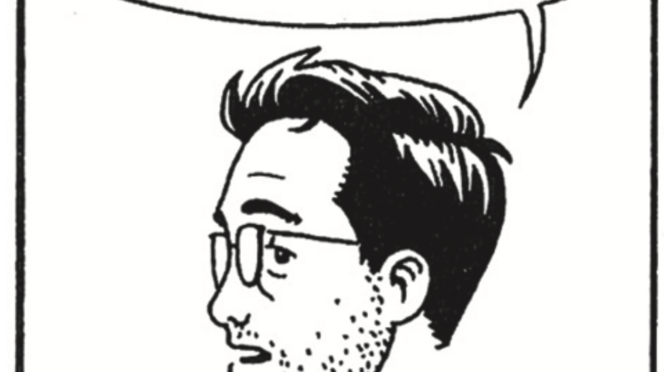
« Ceci n’est pas une personne »: On Jason Lutes’ Berlin (1996–2018) as a Stylistic Showroom
Thursday 23 May, 14:00 / KU Leuven, Van Den Heuvelinstituut (Dekenstraat 2, 3000 Leuven), leslokaal 01.65
During its more than two decades of serial publication and beyond, Jason Lutes’ Berlin has been used by a considerable number of authors pursuing an ‘abstract’ approach to comics, i.e., for illustrating the structures and possibilities of graphic narratives in general terms. These (in a broad sense) didactic uses of Berlin may be explained by the wide variety of its comics-specific elements. The work is a ‘stylistic showroom’ in that it borrows from a number of styles rooted in distinct traditions of 20th-century graphic narratives, employing a variety of different page layouts, text-image combination techniques, and smooth transitions between its different subplots. Continuer la lecture de ACME Speaker Series / Lukas Etter
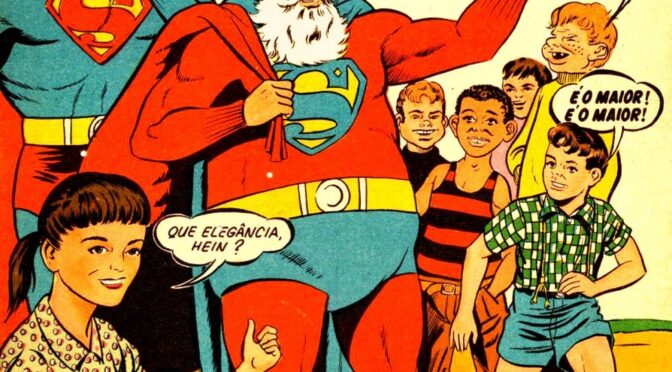
ACME/COMICS LECTURE – IVAN LIMA GOMES
Politics and criticism in the Latin American comics world during the 1960s and 1970s
4 January 2024, 2:00-3:30 PM, Camelot Room, Third Floor, Blandijn, UGent
Abstract
Within Latin America, the 1960s and the 1970s constitute a pivotal period for the comics art world. It was a moment when comics artists and intellectuals sought to assert what meant to produce comics in the region, establishing a clear contrast between the Latin American historietas/quadrinhos and the American comics. Echoing critiques against the “dependency” condition and the U.S. “cultural imperialism”, several Latin American editorial projects aimed at introducing new characters and themes to the comics scene. Continuer la lecture de ACME/COMICS LECTURE – IVAN LIMA GOMES
ACME SPEAKER SERIES – ILAN MANOUACH
Comics as Computation
15 November 2023 — 10:45 | ULiège, Faculté de philosophie, arts & lettres (Quai Roosevelt 1B – access from Place du XX août), building A4 (histoire), Room A4/R30 (ground floor).
A talk by Ilan Manouach, who will be presenting his postdoctoral research project (ULiège).
Abstract
Nowadays, anyone can generate stunning algorithmic illustrations with a few inspired keywords. In the fast-evolving world of computational creativity, the potential impact of AI technologies on comics, a medium that has historically served as a laboratory for today’s global entertainment industries, is a case in point. With the term « synthetic comics, » I propose to describe comics content that was generated, modified or manipulated in a highly automated manner by way of machine learning. Continuer la lecture de ACME SPEAKER SERIES – ILAN MANOUACH
ACME SPEAKER SERIES – AUDREY GARCIA & RODOLFO DAL CANTO
Two lectures by two visiting PhD students at the UGent.
Tuesday 13 June 2023, 10h00-12h00 am | ULB, Brussels, campus Solbosch, room AY2.107
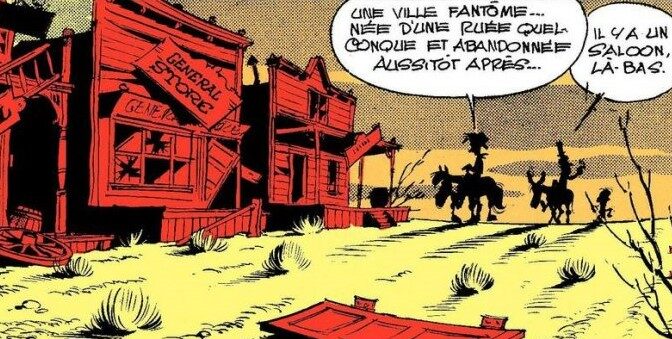
Illustration © Dupuis 2023 Goscinny/Morris
The Imaginary Wild West: Transnational Tropes and the Franco-Belgian Cowboys as a Tool of Self-Reflection (a lecture by Audrey Garcia, University of California, Irvine)
Narrating Uncertainty through Comics: Precarious Times and Ghostly Worlds in Citéville and Citéruin by Jérôme Dubois (a lecture by Rodolfo Dal Canto, University of L’Aquila)
Abstracts
The Imaginary Wild West: Transnational Tropes and the Franco-Belgian Cowboys as a Tool of Self-Reflection (a lecture by Audrey Garcia, University of California, Irvine)
This project focuses on the trope of the Western and the Western cowboy firstly as a tool for transnational exchange and also for exploring national imaginaries, specifically, projections of Franco-Belgian identity. In this study, the prominence of the American cowboy rises to the forefront as I present the cowboy and the mythological West to be a “safe space” for Belgian comics to explore their relation to power and its identity through a third party. Because the mythologized West is an adaptable stage found within the adventure genre, it has potential to convey localized ideologies. Cowboys’ unique openness results from the fact that the “American” cowboy is truly not American at all; cowboys popularized by cinema are based on Italian Spaghetti Westerns or are inspired by tales of Mexican ‘vaqueros’. Therefore, the cowboy is a figment of imagination rooted in idealism and a mythologized version of the American West. The inherent transnationality of cowboys creates a figure capable of becoming adapted by any specific culture. The transnationalism of cowboys and geographic distance of its setting allows the genre to be used as a tool of fantasy that removes itself directly while maintaining its Franco-Belgian characteristics. Furthermore, the ability for these figures to travel internationally allows it to open pathways for various social commentary and expansion into new iterations of the trope.
Narrating Uncertainty through Comics: Precarious Times and Ghostly Worlds in Citéville and Citéruin by Jérôme Dubois (a lecture by Rodolfo Dal Canto, PhD student at the University of L’Aquila)
In 2020, French cartoonist Jérôme Dubois simultaneously published a couple of comics for two different publishing houses: Citéville, brought out by Cornélius, and Citéruin, released by Éditions Matière. The former features nine short chapters set in a major urban center, Citéville: here the characters are victims of various forms of systemic violence, within dynamics that border on dystopia. Citéruin looks like the same comic, with the division into short stories with the same title, identical layout and framing, with one fundamental change: the streets of Citéville are deserted, completely devoid of human presence, and the buildings seem to have been abandoned long ago or struck by a sudden catastrophe. Jérôme Dubois’ double work shows different levels of precariousness, which turn out to coexist in a layered dialogue. On the one hand, Citéville shows through a grotesque style some characteristics peculiar to our contemporary times, such as job precariousness or the difficulty of building a future within dynamics that are as rigid as they are absurd; on the other hand, Citéruin stages, through a story told by subtraction, the existential uncertainty of humanity as a whole. Through an original use of tools proper to the comic medium, the author makes human presence coexist with his own absence, inviting reflection on the time and space we inhabit, and the ruin inscribed in them. The presentation will navigate through these intersections, analyzing the two texts using an approach that links the themes related to ecocriticism, posthumanism, and precarity with the formal strategies through which they are told, using a medium-specific approach.
ACME SPEAKER SERIES — CLARA VILABOA SAENZ
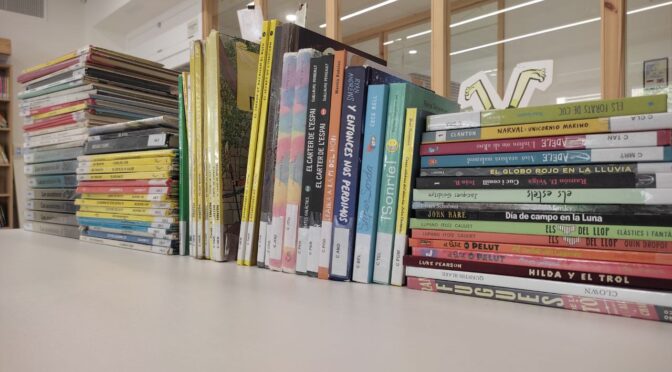
Comics in the reading ecosystem: Discussing children’s comics as part of literary education in the Spanish Elementary School
Friday 12 May 2023, 15h00-17h00 | KULeuven, Mgr. Sencie Instituut (MSI), room 02.15
The lecture by Clara Vilaboa Sáenz (PhD student of Education and Literature, Universitat Autónoma de Barcelona) will be followed by a group discussion of the book in open access Sugar, Spice, and the Not So Nice: Comics Picturing Girlhood, ed. by Dona Pursall and Eva Van de Wiele (only chapter 1 and chapter 9).
Abstract
Elementary Schools constitute a key context in the literary experience of the child reader as open, public spaces in which all children have an opportunity to encounter literature. This research project aims to analyse the literary and pedagogic value of children’s comics and focuses on the double impact that comics have as tools to promote reading and as strategies to develop the multimodal reading competence. To document and interpret the reality of comics in the reading ecosystem of the school, we have carried out an ethnographic, collaborative study on a public school in Spain (6- to 12-year-olds) that has focused on the needs, interests and challenges that appear when integrating comics in the school. Here, we have designed two main lines of action: the analysis of how comics are integrated and promoted from the school library and the analysis of the pedagogy implied in the promotion, reading and discussion of comics in a 4th-year classroom (8- to 10-year-olds). In addition, we have documented the perspectives of children, teachers, librarians and families to have a holistic perception of the role of comics in the school. This ethnographic study constitutes the core of the research project and has been complemented with a theoretical review of the research published on the intersection of comics and Elementary Education between the years 2000 to 2023. Thus, the project has allowed us to acquire a longitudinal and contextualised perspective of the role that children’s comics have in Elementary School.